Advocates, Strategists, Friends:
The Impact of UIC Faculty
No matter the department, faculty at the University of Illinois Chicago help students manage more than just good grades.
by Justin Howard Rosier
A hand on the shoulder with words of encouragement. A coffee shop meeting that expands what’s possible as new opportunities are discussed. Faculty at the University of Illinois Chicago compete their ideas globally, and choose to be here. For students, they often turn doubt into belief. They are a hub for support and stability in a fast-changing world.
The stories told by our alumni about faculty who changed their lives range across time and disciplines; what connects them is a sense of responsibility. UIC faculty take it upon themselves to see students’ path to success, even if the students can’t. They are an integral part of realizing our mission to provide the broadest access to the highest levels of educational, research and clinical excellence.
Explore the stories of alumni and students talking faculty and staff who made a difference.
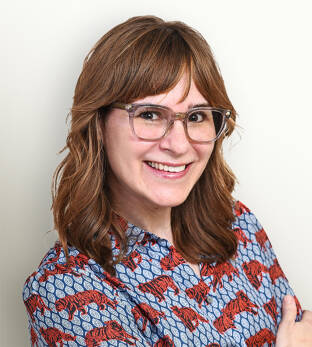
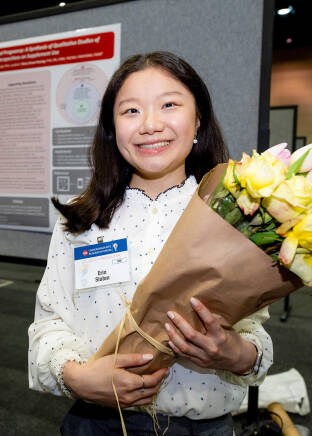
Mary Dawn Koenig (above) helped Erin Slaten BS ’26 navigate her nursing education.
Scholarship, Paired with Professional Development
“As a first-generation student in the College of Nursing, I began my academic career with plenty of ambition but little direction,” says Erin Slaten BS ’26. Then Mary Dawn Koenig, a professor in the College of Nursing and the director of its PhD program, stepped in to help her navigate..
Koenig steeped her into research early, pairing her with a PhD student who let her contribute to a literature review on maternal and child health, and a Fulbright scholar who mentored her on a study abroad trip in Rwanda. Slaten credits Koenig for fostering “a supportive environment where I felt respected and empowered to produce high-level work” during her time at UIC, and says her guidance helped her secure a Gloria Flaherty Research Scholarship from the Honors College.
“She taught me to integrate clinical expertise, research and compassion to improve outcomes for vulnerable populations,” Slaten says.
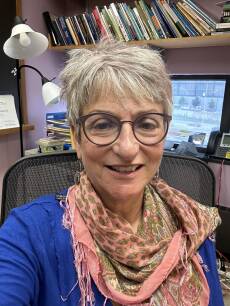
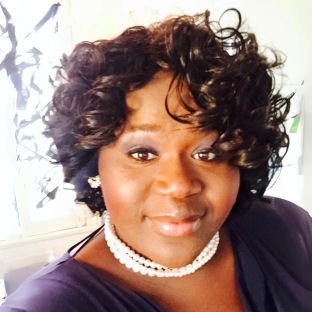
Michelle Parker-Katz (above) encouraged Bonita Holmes MEd ’20 to prepare.
Making Resilience Known
Bonita Holmes MEd ’20 and her classmates faced the unthinkable when the COVID-19 pandemic spurred global lockdowns and sent much of the academic world into remote learning. Life doesn’t stop in moments like these, and neither did Michelle Parker-Katz, clinical professor emerita and coordinator of UIC’s Masters of Education program in special education.
On top of the health concerns, financial uncertainty, family hardships and unprecedented disruption, “Our program was academically rigorous,” Holmes noted. Students lived with the fear of passing the certification exams required for their special education licenses. “Rather than allowing us to give in to fear, Parker-Katz consistently challenged us to replace anxiety with preparation,” Holmes added. “She reminded us that confidence comes from doing the work and encouraged us to trust the process instead of being overwhelmed by it. That mindset has stayed with me throughout my career.” Holmes now serves as a special education teacher for the Illinois Department of Juvenile Justice and an education consultant helping schools incorporate artificial intelligence into their curriculum to reduce burnout for special education teachers.
Holmes also credits Parker-Katz for instilling a sense of integrity, fidelity, best practices and information backed by research to students within her cohort.
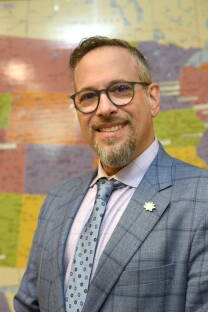
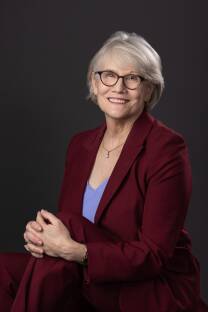
Dr. Kristi Kirschner (above) passed the torch to Eric Swirsky MPHE ’23.
Building Institutions, and Future Leaders
Sometimes the hardest — and most beneficial — thing a faculty member can do is pass the torch. Dr. Kristi Kirschner, a clinical professor and director of undergraduate education for the Department of Medical Education, spearheaded the founding of UI Health’s Health Humanities and Ethics curriculum, which she led for almost a decade. When Eric Swirsky MPHE ’23 joined the health humanities leadership team, he says that Dr. Kirschner mentored him “with generosity, trust and deep institutional insight.”
“She helped me understand not only what had been taught, but why particular topics, structures and relationships had developed as they had,” Swirsky says.
Ensuring that he fully understood the curriculum was invaluable, but ultimately what Dr. Kirschner gave him was the confidence and space to lead the program in his own voice. Her emphasis on looking beyond ethics as a legal and analytical framework, toward developing the confidence and judgement to respond to difficult situations, helped Swirsky adapt the program to address emerging concerns. Students go through more active learning, and there is greater emphasis on clinical cases to address issues such as artificial intelligence and institutional pressures.
“She helped me find my own voice by giving me institutional memory without treating that history as a script I was required to follow,” Swirsky says.
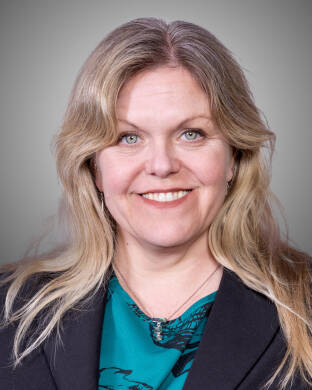
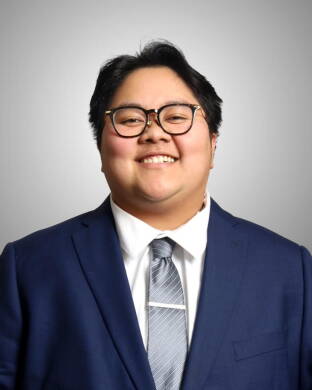
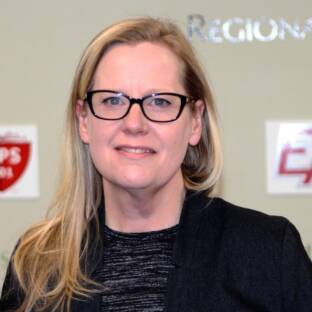
Claire Johnson Raba (above) cared about Sofia Domingono’s career outcomes.
Teaching Generosity by Example
“I see her around the classroom joking around with the students and making civil procedure fun,” Sofia Domingono, a JD candidate in the UIC School of Law, says of Assistant Professor of Law Claire Johnson Raba. “I see her around campus always saying hello and briefly catching up. I see her in office hours explaining difficult topics in the simplest ways.”
The latter time with Johnson Raba was particularly meaningful: Domingono, who currently serves as a law clerk at Koya Law LLC, used this time to gain perspective on her career opportunities. After Johnson Raba explained the role of law clinics in expanding access to legal services, Domingono joined the Fair Housing Legal Clinic at UIC Law, working with individuals who experienced housing discrimination across a range of protected classes. “It was an incredibly meaningful experience,” Domingono said — all because she took Johnson Raba’s advice. “She showed me how a professor can truly care about your career outcomes and your success,” she says. “She encourages me to help the communities that I’m part of because that is what she has done for the entirety of her career.”
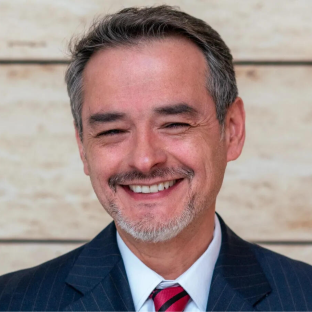
William Rodriguez (above) got Mario Diaz BA ’99 where he is today.
Encourage
the Present.
Plot for the Future.
Mario Diaz BA ’99 remains grateful to William Rodriguez, a former counselor and recruiter for UIC’s Latin American Recruitment and Educational Services Program.
“Without him, I would not be where I am today,” Diaz says.
Diaz now serves as assistant dean for recruitment in the College of Applied Health Sciences, but some coursework difficulties he experienced as an undergrad made him question whether college was the right place for him. Rodriguez disagreed, and helped Diaz create a plan to get back on track in his classes. “His belief in me, at a moment when I doubted myself, shaped the course of my academic journey,” Diaz says. “His commitment to his students and his ability to motivate and encourage those who felt like they did not belong reminded us that we did have a place, and that we were capable of more than we realized.”
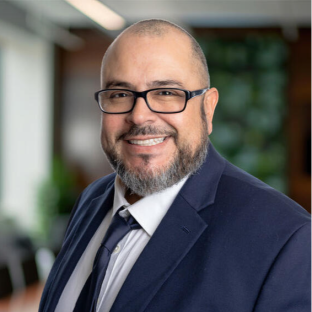
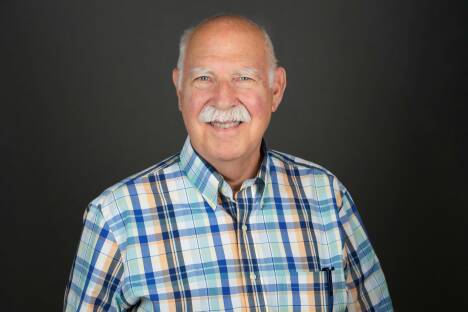
Paul Zavitkovsky (above) sharpened Trisha Shrode’s EdD ’17 emotional intelligence.
Mentorship to Last a Lifetime
Before encountering Paul Zavitkovsky, a leadership coach in educational policy studies at UIC, Trisha Shrode EdD ’17 considered herself a “novice administrator.” Now the assistant superintendent of teaching and learning at Woodland Community Consolidated School District NO. 50, Shrode says Zavitkovsky’s mentorship helped sharpen her emotional intelligence while also giving her the tools to create a culture of resiliency within her staff.
“During my early days as a principal, there were times that we would discuss issues, and if he thought I was making the wrong decision, he would push me ‘to get on the balcony’ and look at the data and the facts and not make quick and/or emotionally charged decisions,” Shrode says. This advice, as well as Zavitkovsky’s example of treating everyone he encountered with common decency, helped her navigate difficult educational environments where staff members had fallen into habits to protect themselves that weren’t in the best interest of students.
Zavitkovsky’s influence has made her a more thoughtful, empathetic and strategic human being, Shrode says, though Zavitkovsky’s greatest gift of all may be his example of leadership as an ongoing project. “He continues to be an advocate, my strategist and my friend, always willing to respond to an email, or phone call and show up,” Shrode says.


Advocates, Strategists, Friends:
The Impact of UIC Faculty
No matter the department, faculty at the University of Illinois Chicago help students manage more than just good grades.
by Justin Howard Rosier
A hand on the shoulder with words of encouragement. A coffee shop meeting that expands what’s possible as new opportunities are discussed. Faculty at the University of Illinois Chicago compete their ideas globally, and choose to be here. For students, they often turn doubt into belief. They are a hub for support and stability in a fast-changing world.
The stories told by our alumni about faculty who changed their lives range across time and disciplines; what connects them is a sense of responsibility. UIC faculty take it upon themselves to see students’ path to success, even if the students can’t. They are an integral part of realizing our mission to provide the broadest access to the highest levels of educational, research and clinical excellence.
Explore the stories of alumni and students talking faculty and staff who made a difference.

Before encountering Paul Zavitkovsky, a leadership coach in educational policy studies at UIC, Trisha Shrode EdD ’17 considered herself a “novice administrator.” Now the assistant superintendent of teaching and learning at Woodland Community Consolidated School District NO. 50, Shrode says Zavitkovsky’s mentorship helped sharpen her emotional intelligence while also giving her the tools to create a culture of resiliency within her staff.
“During my early days as a principal, there were times that we would discuss issues, and if he thought I was making the wrong decision, he would push me ‘to get on the balcony’ and look at the data and the facts and not make quick and/or emotionally charged decisions,” Shrode says. This advice, as well as Zavitkovsky’s example of treating everyone he encountered with common decency, helped her navigate difficult educational environments where staff members had fallen into habits to protect themselves that weren’t in the best interest of students.
Zavitkovsky’s influence has made her a more thoughtful, empathetic and strategic human being, Shrode says, though Zavitkovsky’s greatest gift of all may be his example of leadership as an ongoing project. “He continues to be an advocate, my strategist and my friend, always willing to respond to an email, or phone call and show up,” Shrode says.
Paul Zavitkovsky (above) sharpened Trisha Shrode’s EdD ’17 emotional intelligence.
Mentorship to Last a Lifetime
Mario Diaz BA ’99 remains grateful to William Rodriguez, a former counselor and recruiter for UIC’s Latin American Recruitment and Educational Services Program.
“Without him, I would not be where I am today,” Diaz says.
Diaz now serves as assistant dean for recruitment in the College of Applied Health Sciences, but some coursework difficulties he experienced as an undergrad made him question whether college was the right place for him. Rodriguez disagreed, and helped Diaz create a plan to get back on track in his classes. “His belief in me, at a moment when I doubted myself, shaped the course of my academic journey,” Diaz says. “His commitment to his students and his ability to motivate and encourage those who felt like they did not belong reminded us that we did have a place, and that we were capable of more than we realized.”
William Rodriguez (above) got Mario Diaz BA ’99 where he is today.
Encourage
the Present.
Plot for the Future.
“I see her around the classroom joking around with the students and making civil procedure fun,” Sofia Domingono, a JD candidate in the UIC School of Law, says of Assistant Professor of Law Claire Johnson Raba. “I see her around campus always saying hello and briefly catching up. I see her in office hours explaining difficult topics in the simplest ways.”
The latter time with Johnson Raba was particularly meaningful: Domingono, who currently serves as a law clerk at Koya Law LLC, used this time to gain perspective on her career opportunities. After Johnson Raba explained the role of law clinics in expanding access to legal services, Domingono joined the Fair Housing Legal Clinic at UIC Law, working with individuals who experienced housing discrimination across a range of protected classes. “It was an incredibly meaningful experience,” Domingono said — all because she took Johnson Raba’s advice. “She showed me how a professor can truly care about your career outcomes and your success,” she says. “She encourages me to help the communities that I’m part of because that is what she has done for the entirety of her career.”
Claire Johnson Raba (above) cared about Sofia Domingono’s career outcomes.
Teaching Generosity by Example
Sometimes the hardest — and most beneficial — thing a faculty member can do is pass the torch. Dr. Kristi Kirschner, a clinical professor and director of undergraduate education for the Department of Medical Education, spearheaded the founding of UI Health’s Health Humanities and Ethics curriculum, which she led for almost a decade. When Eric Swirsky MPHE ’23 joined the health humanities leadership team, he says that Dr. Kirschner mentored him “with generosity, trust and deep institutional insight.”
“She helped me understand not only what had been taught, but why particular topics, structures and relationships had developed as they had,” Swirsky says.
Ensuring that he fully understood the curriculum was invaluable, but ultimately what Dr. Kirschner gave him was the confidence and space to lead the program in his own voice. Her emphasis on looking beyond ethics as a legal and analytical framework, toward developing the confidence and judgement to respond to difficult situations, helped Swirsky adapt the program to address emerging concerns. Students go through more active learning, and there is greater emphasis on clinical cases to address issues such as artificial intelligence and institutional pressures.
“She helped me find my own voice by giving me institutional memory without treating that history as a script I was required to follow,” Swirsky says.
Dr. Kristi Kirschner (above) passed the torch to Eric Swirsky MPHE ’23.
Building Institutions, and Future Leaders
Bonita Holmes MEd ’20 and her classmates faced the unthinkable when the COVID-19 pandemic spurred global lockdowns and sent much of the academic world into remote learning. Life doesn’t stop in moments like these, and neither did Michelle Parker-Katz, clinical professor emerita and coordinator of UIC’s Masters of Education program in special education.
On top of the health concerns, financial uncertainty, family hardships and unprecedented disruption, “Our program was academically rigorous,” Holmes noted. Students lived with the fear of passing the certification exams required for their special education licenses. “Rather than allowing us to give in to fear, Parker-Katz consistently challenged us to replace anxiety with preparation,” Holmes added. “She reminded us that confidence comes from doing the work and encouraged us to trust the process instead of being overwhelmed by it. That mindset has stayed with me throughout my career.” Holmes now serves as a special education teacher for the Illinois Department of Juvenile Justice and an education consultant helping schools incorporate artificial intelligence into their curriculum to reduce burnout for special education teachers.
Holmes also credits Parker-Katz for instilling a sense of integrity, fidelity, best practices and information backed by research to students within her cohort.
Michelle Parker-Katz (above) encouraged Bonita Holmes MEd ’20 to prepare.
Making Resilience Known
“As a first-generation student in the College of Nursing, I began my academic career with plenty of ambition but little direction,” says Erin Slaten BS ’26. Then Mary Dawn Koenig, a professor in the College of Nursing and the director of its PhD program, stepped in to help her navigate..
Koenig steeped her into research early, pairing her with a PhD student who let her contribute to a literature review on maternal and child health, and a Fulbright scholar who mentored her on a study abroad trip in Rwanda. Slaten credits Koenig for fostering “a supportive environment where I felt respected and empowered to produce high-level work” during her time at UIC, and says her guidance helped her secure a Gloria Flaherty Research Scholarship from the Honors College.
“She taught me to integrate clinical expertise, research and compassion to improve outcomes for vulnerable populations,” Slaten says.
Mary Dawn Koenig (above) helped Erin Slaten BS ’26 navigate her nursing education.
