The Making of
a Pulitzer-Prize Winning Reporter
Long before his reporting earned a Pulitzer Prize, Gregory Royal Pratt was holding leaders to account as a UIC student.
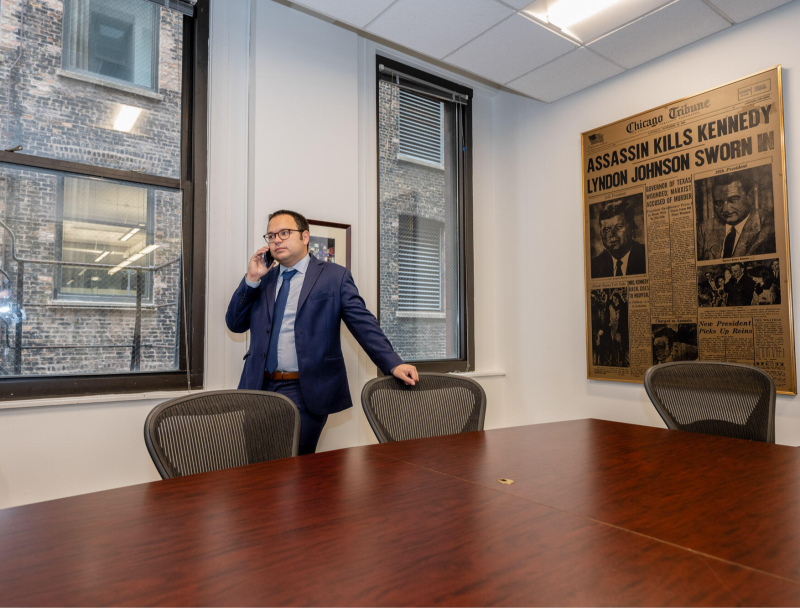
When the Chicago Tribune newsroom learned it had won the 2026 Pulitzer Prize for Local Reporting, Gregory Royal Pratt BA ’10 was surrounded by colleagues with whom he had spent weeks documenting one of the most consequential chapters in recent Chicago history.
Their reporting package for Operation Midway Blitz documented how the “siege-like incursion of ICE agents unified Chicagoans in resistance,” the Pulitzer Prize website notes.
Pratt was a key contributor to the prize‑winning body of work, with bylines on six stories and additional reporting on several others. He pitched the project’s flagship narrative, interviewed city and state leaders, and reported from the streets as events unfolded. He was tear-gassed and received death threats online for his work. It was intimidating, he says, but in the end his job is to keep his head down and do the work.
“I was just proud that when the city needed us, the Chicago Tribune was there,” Pratt says when asked how the recognition felt.
The Pulitzer Prize is a milestone on a path shaped by drive and focus that began long before the recognition. Pratt’s work ethic was developed early on by his upbringing in Chicago’s Little Village and reinforced at the Chicago High School for Agricultural Sciences, where he began each morning in the barn feeding animals and cleaning pens. Pratt jokes that working with farm animals prepared him well for covering politicians. “They make a lot of messes,” he says, “and other people have to clean them up.”
From there, the journey to UIC was an easy decision; the campus was close to his home in Little Village, and Pell Grants paid his tuition. At UIC, he found an environment that rewarded his curiosity and seriousness of purpose. The rigor, independence and deep sense of responsibility that Pratt feels toward the public are the values he learned at UIC, where he was a political science and history major in the College of Liberal Arts and Sciences and the Honors College, and a reporter for UIC's now-shuttered student newspaper, the Chicago Flame.
Professors across political science and history treated his questions as worth pursuing, even when the questions were uncomfortable. Mentors encouraged him not to wait for permission, but to use the tools available to him: research, public records and persistence to investigate how institutions work. And editors at the Flame trusted student reporters to do real journalism.
Kate Lee BS ’11, the Flame’s editor in chief at the time, reinforced a lesson that would shape his career: The job of a newsroom is not to protect relationships, but to protect the truth. When Pratt reported on student government and administrators, sometimes scrutinizing people Lee knew personally, she refused to soften coverage.
“‘Unless something is inaccurate, I’m not going to overrule it because it hurts feelings,’” Pratt recalls her saying. “‘We’re here to do journalism, and journalism sometimes hurts feelings.’”
Pratt double majored and still graduated in three years while reporting for Chicago Flame. After UIC, Pratt gravitated toward work that felt familiar: holding institutions accountable. He interned at the Better Government Association and then took a job at the Phoenix New Times, where he first covered immigration. In 2011, the paper assigned him to report on ICE detention, an experience he now describes as foundational.
“I learned a lot about how the immigration system works,” he says, “and how it doesn’t.” Fourteen years later, as he reported on Operation Midway Blitz, he found himself drawing on that early understanding again and again.

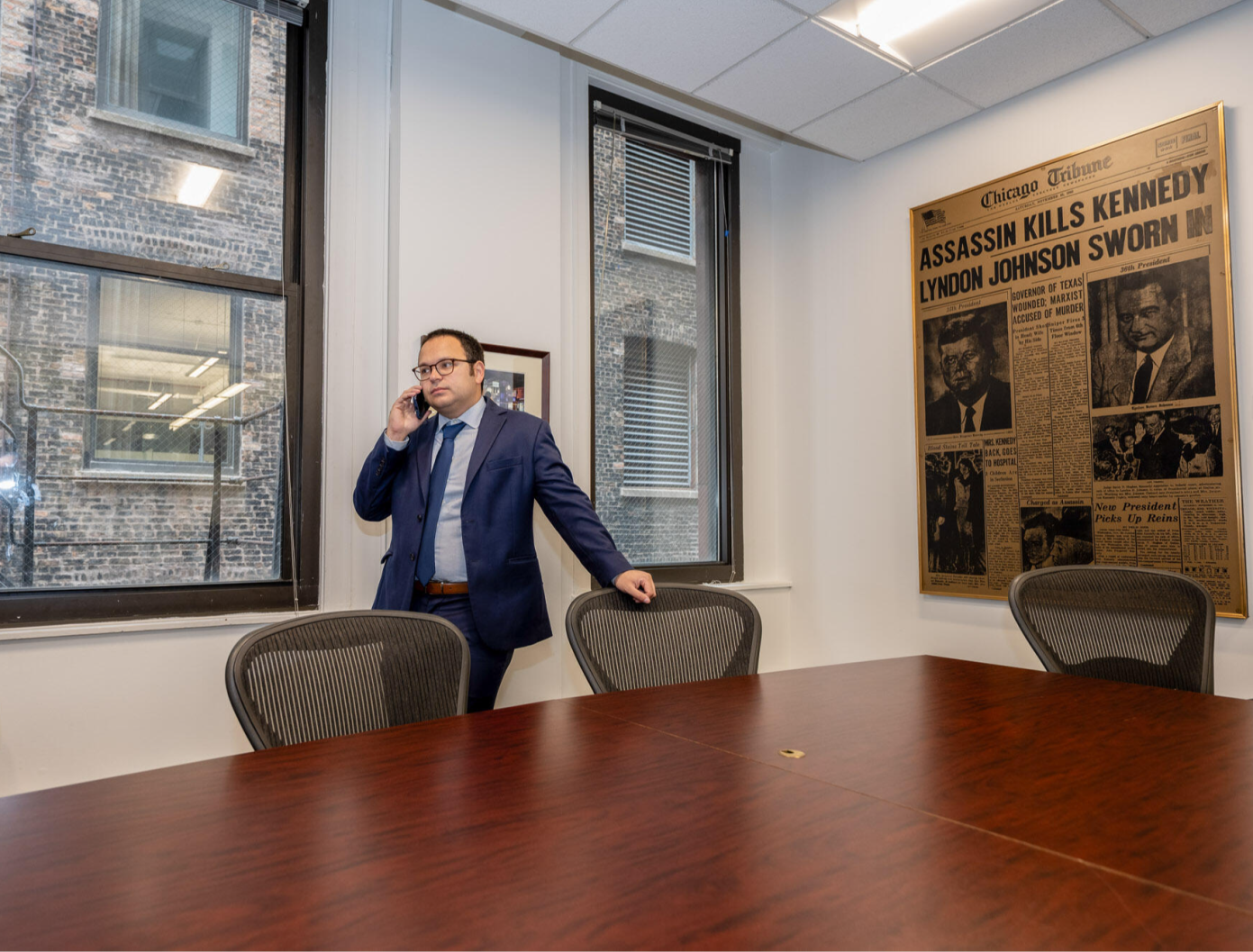
When Pratt returned to Chicago and joined the Tribune in 2013, he continued doing what he had learned to do at UIC: read records closely, question power and connect dots others might miss.
Over time, that work brought him from suburban watchdog reporting to City Hall, where he covered three mayors and wrote “The City is Up for Grabs: How Chicago Mayor Lori Lightfoot Led and Lost a City in Crisis.” At one point, Lightfoot instructed her staff not to provide Pratt with information. “When you’re dealing with an uncooperative government leader, you toughen up,” he says. “That came out during Midway Blitz.”
In addition to the Pulitzer, Pratt has been a finalist for the Livingston Award, which honors journalists under age 35 for outstanding achievement, and was recognized by the National Headliner Awards, the Scripps Howard Journalism Awards, and Public Narrative’s Studs Terkel Awards.
Looking back, Pratt often tells young journalists that his career has been less about reinvention than refinement. While he is always trying to learn new skills and approaches to newsgathering, he says the fundamentals of talking to people and reading reports doesn’t change. “I’m doing the same things I did in college,” he says. “Just better.”

The Making of
a Pulitzer-Prize Winning Reporter
Long before his reporting earned a Pulitzer Prize, Gregory Royal Pratt was holding leaders to account as a UIC student.
When the Chicago Tribune newsroom learned it had won the 2026 Pulitzer Prize for Local Reporting, Gregory Royal Pratt BA ’10 was surrounded by colleagues with whom he had spent weeks documenting one of the most consequential chapters in recent Chicago history.
Their reporting package for Operation Midway Blitz documented how the “siege-like incursion of ICE agents unified Chicagoans in resistance,” the Pulitzer Prize website notes.
Pratt was a key contributor to the prize‑winning body of work, with bylines on six stories and additional reporting on several others. He pitched the project’s flagship narrative, interviewed city and state leaders, and reported from the streets as events unfolded. He was tear-gassed and received death threats online for his work. It was intimidating, he says, but in the end his job is to keep his head down and do the work.
“I was just proud that when the city needed us, the Chicago Tribune was there,” Pratt says when asked how the recognition felt.
The Pulitzer Prize is a milestone on a path shaped by drive and focus that began long before the recognition. Pratt’s work ethic was developed early on by his upbringing in Chicago’s Little Village and reinforced at the Chicago High School for Agricultural Sciences, where he began each morning in the barn feeding animals and cleaning pens. Pratt jokes that working with farm animals prepared him well for covering politicians. “They make a lot of messes,” he says, “and other people have to clean them up.”
From there, the journey to UIC was an easy decision; the campus was close to his home in Little Village, and Pell Grants paid his tuition. At UIC, he found an environment that rewarded his curiosity and seriousness of purpose. The rigor, independence and deep sense of responsibility that Pratt feels toward the public are the values he learned at UIC, where he was a political science and history major in the College of Liberal Arts and Sciences and the Honors College, and a reporter for UIC's now-shuttered student newspaper, the Chicago Flame.
Professors across political science and history treated his questions as worth pursuing, even when the questions were uncomfortable. Mentors encouraged him not to wait for permission, but to use the tools available to him: research, public records and persistence to investigate how institutions work. And editors at the Flame trusted student reporters to do real journalism.
Kate Lee BS ’11, the Flame’s editor in chief at the time, reinforced a lesson that would shape his career: The job of a newsroom is not to protect relationships, but to protect the truth. When Pratt reported on student government and administrators, sometimes scrutinizing people Lee knew personally, she refused to soften coverage.
“‘Unless something is inaccurate, I’m not going to overrule it because it hurts feelings,’” Pratt recalls her saying. “‘We’re here to do journalism, and journalism sometimes hurts feelings.’”
Pratt double majored and still graduated in three years while reporting for Chicago Flame. After UIC, Pratt gravitated toward work that felt familiar: holding institutions accountable. He interned at the Better Government Association and then took a job at the Phoenix New Times, where he first covered immigration. In 2011, the paper assigned him to report on ICE detention, an experience he now describes as foundational.
“I learned a lot about how the immigration system works,” he says, “and how it doesn’t.” Fourteen years later, as he reported on Operation Midway Blitz, he found himself drawing on that early understanding again and again.

When Pratt returned to Chicago and joined the Tribune in 2013, he continued doing what he had learned to do at UIC: read records closely, question power and connect dots others might miss.
Over time, that work brought him from suburban watchdog reporting to City Hall, where he covered three mayors and wrote “The City is Up for Grabs: How Chicago Mayor Lori Lightfoot Led and Lost a City in Crisis.” At one point, Lightfoot instructed her staff not to provide Pratt with information. “When you’re dealing with an uncooperative government leader, you toughen up,” he says. “That came out during Midway Blitz.”
In addition to the Pulitzer, Pratt has been a finalist for the Livingston Award, which honors journalists under age 35 for outstanding achievement, and was recognized by the National Headliner Awards, the Scripps Howard Journalism Awards, and Public Narrative’s Studs Terkel Awards.
Looking back, Pratt often tells young journalists that his career has been less about reinvention than refinement. While he is always trying to learn new skills and approaches to newsgathering, he says the fundamentals of talking to people and reading reports doesn’t change. “I’m doing the same things I did in college,” he says. “Just better.”